AlphaPhoenix (Dr. Brian Haidet) has a lovely YouTube channel that I follow. His Algorithmic Redesign video has a great analogy for solving problems with randomness and inherent drift - How to untangle a pair of headphones.
Jiggle the headphones, aka boil the thing to apply temperature (randomness)
Gently pull them apart, aka apply a driving force (a fitness function, a forcing function)
And that’s a great analogy for my day-to-day - how to ensure the codebases in my domain remain healthy without me micro-managing and at scale? Every new feature request introduces new changes (new randomness). By setting good feedback loops, of course!
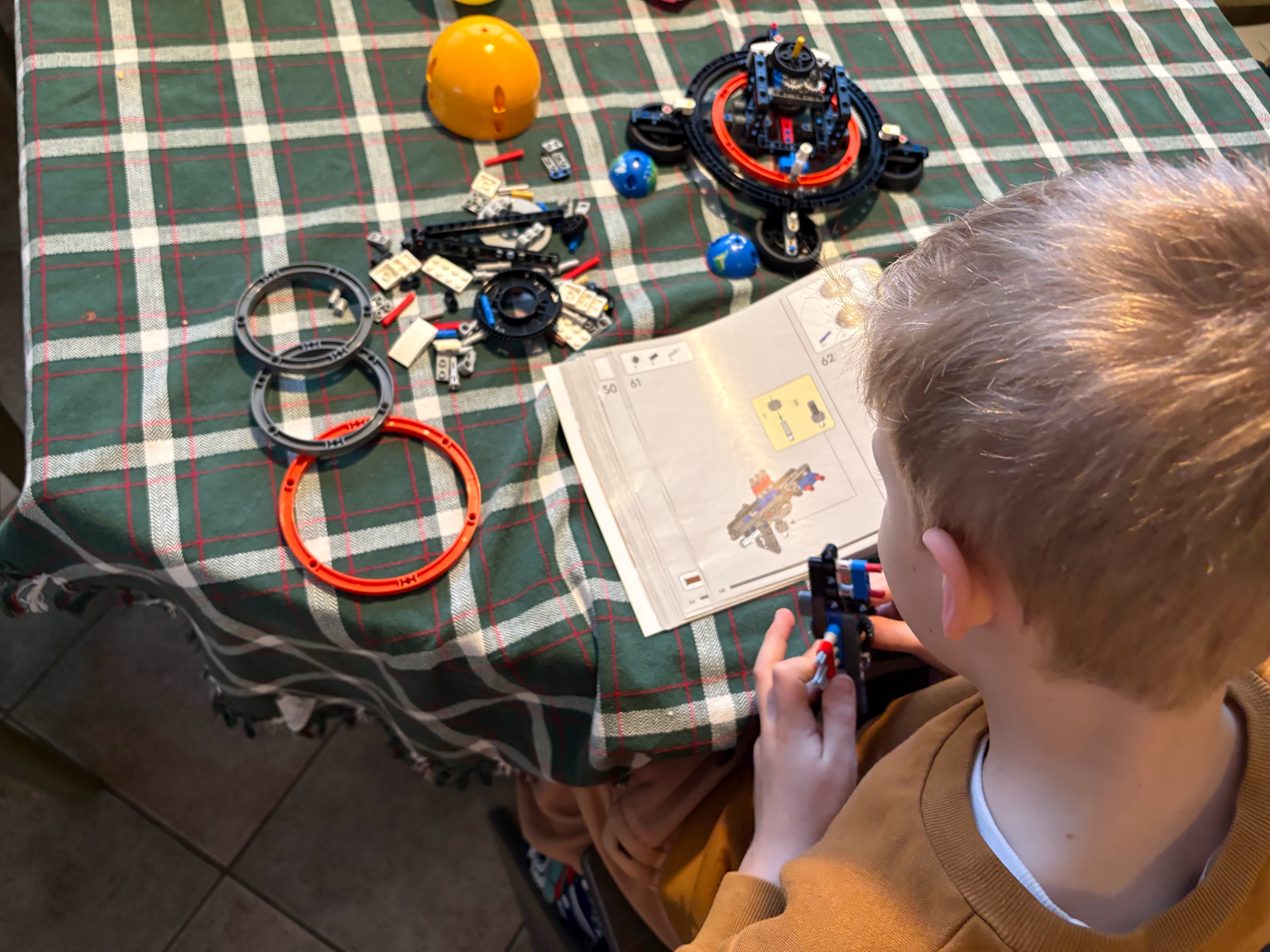
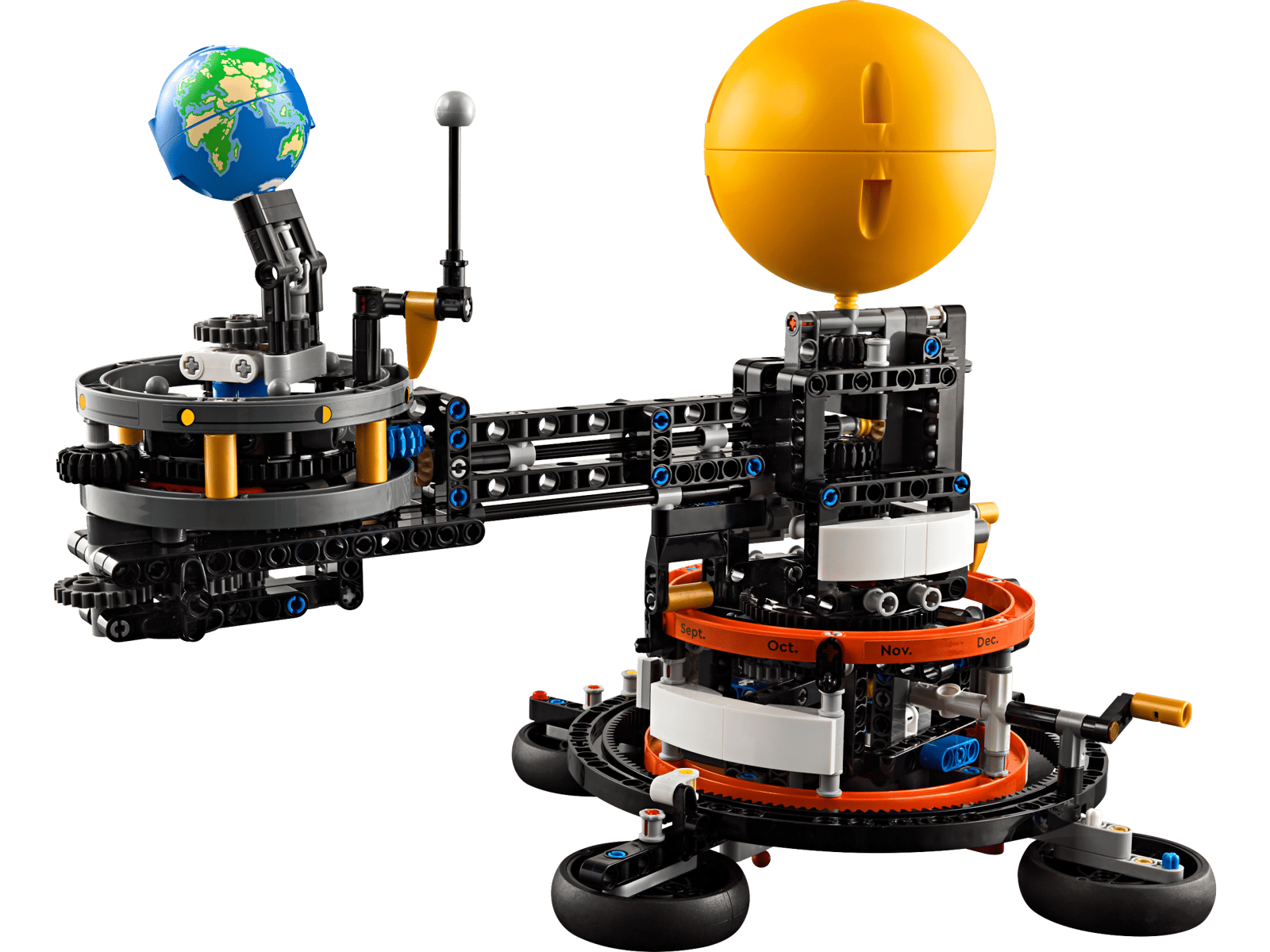
One year ago, I made a note to plan out a trip to see the total solar eclipse with my family. Figuring out where to drive to / fly to was not fun. What was fun, however, was teaching my kiddos about what the solar eclipse even is!
Planet Earth and Moon in Orbit (42179) LEGO.com. On the left: My son building the set. On the right: Stock image from LEGO. Hover a panel (desktop) to play the animation; follow the link to open the full photo.
Unfortunately, our experience won’t be like the one from this YouTube video - the sun will be only at 2 degrees from the horizon - basically an obstructed sunset. I’m still excited!
I’ve been playing with Loveable today. It’s impressive how the barrier to entry for proof of concepts and even small MVPs has got so low. Some SaaS tools might have a not-so-bright feature now that everyone can generate a simple to-do list just for themselves.
What impressed me is how fully vertically integrated it is: Supabase and even Cloudflare - moving to your own domain was literally one Oauth click away. Databases, sending emails and even payment processing is seemingly a prompt away.
My own little spin was exporting the generated code to my own GitHub and enabling GitHub Pages. A simple prompt to change the Vite config to generate static files, and boom, it works well with my blog setup. Switching to Cursor or Copilot also seems cheaper and works well.
Next up, I plan on connecting some of the self-contained apps to each other. Multiplayer plus Space rocks? Nuggets and Boxes?
LLMs have been trained on open source code, including Manim - a mathematical animation engine created by 3Blue1Brown. Give an LLM a simple prompt like “create a Manim animation showing the Pythagorean theorem” and you’ll get a working animation.
We bought a house! Before moving in, I captured a 3D scan using Polycam (and manually butchering the output file using Blender).
Explore the interactive 3D scan here. You can walk around using WASD keys.
I’m pleasantly surprised by the level of detail and accuracy captured in the scan. It allowed me to more accurately visualize the space from home. The vibe-coded snipped worked out-of-the-gate on my Quest 2 even if the navigation is nausea-inducing.
Turns out a few walls were slightly off from the blueprints. I leaned into the scan along with the original floorplans to 3d-print a few options for the bathroom layout. A nice hoby and a nice snapshot of this moment in time.
I had the opportunity to help shape a complex project whose primary developer and driver strongly embraced LLMs and agent-driven development. He wanted to move extremely fast. Others were worried we were abandoning basic engineering discipline.
The pressure to deliver, along with the optimistic stance, led to clashes with implicit assumptions. The tension wasn’t about intelligence or capability but about different risk tolerances and motivations.
It is not a new problem but is likely to get worse as the ability to write code outpaces other processes.
Every difficult conversation is really three conversations happening at once:
What happened - the “truth” or facts of the situation
Feelings - how we feel about it (emotions)
Identity - what it means about us
Most arguments fail because we focus only on proving our version of “what happened” while ignoring the feelings and identity threats underneath. The key is shifting from trying to win to being genuinely curious about the other person’s perspective, acknowledging emotions (theirs and yours), and separating your self-worth from the outcome.
Book also comes with hands-on examples that I did not jot down. I’ll likely revisit this book in a year to reflect. My full notes are available on Lucidspark.
Meta: I try making notes to intensionally slow down and, hopefully, get more out of a book. I tried both Miro and Lucidspark but keep coming back to Excalidraw.
Because it is open source I thought I’d try using it to present my notes in a read-only way. It also has a big ceiling for visualizing other things - like auto-generated flow-charts in a much nicer way than Mermaid.
The half-assed demo is available here.
A very promising tool, likely only going to get stronger in the future.
Guidig principles if I’d use this in my day to day:
develop in a way that lets you verify if what is generated is correct early and often. Nothing special - this is a part of “shifting left” - unit tests or live code reloading ensure that what you generate actually works as you go
pre-prompting seems very promising
avoiding the burden of reviewing to the PR reviewer - make sure the team is aligned that either standards will be lower or different. Different does not mean bad
reducing the surface area of the changes helps with the above problem - If you’re refactoring or generating a targeted set of changes its less likely things will go wrong. Using Modules or Microservices goes a long way here - teams can have relaxed standards and cognitive load can be eased in other ways.
The above “principles” are not conclusions but mostly just working thoughts. I invite anyone to chime in and help me shape those…
Making code design standards explicit as a team helps. We never take shortcuts with things like security. We can take shortcuts with maintainability. Getting on the same page about the impact of those standards is easier said than done and they diverge from project to project.
Try the live demo here - updated in March of 2026.
A while back, I explored what learning a new concept/approach (Genetic Algorithms) in the age of LLMs looks like. I enjoyed it, but I wouldn’t say it sped up my process.
I started with a very bold prompt to create an image generation program. Copilot confidently generated something that worked. Upon inspection, it was just a single iteration - it drew a triangle! I switched my approach to creating a scaffold of the necessary steps. An outline of the code. This helped me tackle the problem abstractly. Lastly I attempted feeding the LLM working Python code and tasking Copilot to rework it using JavaScript and Canvas. It worked, but what did I actually learn?
I started refactoring the code and tweaking it to make it my own. I wanted to speed it up and change the image style. This took me several hours and led to my final verdict - I likely would have implemented it from scratch faster and gained the same amount of understanding. Still impressive, and it has potential as something that will only get better with time.
Now I have a way to generate these little animations from images. Do you recognize any books?



.jpg)